
 Image 1 of 4
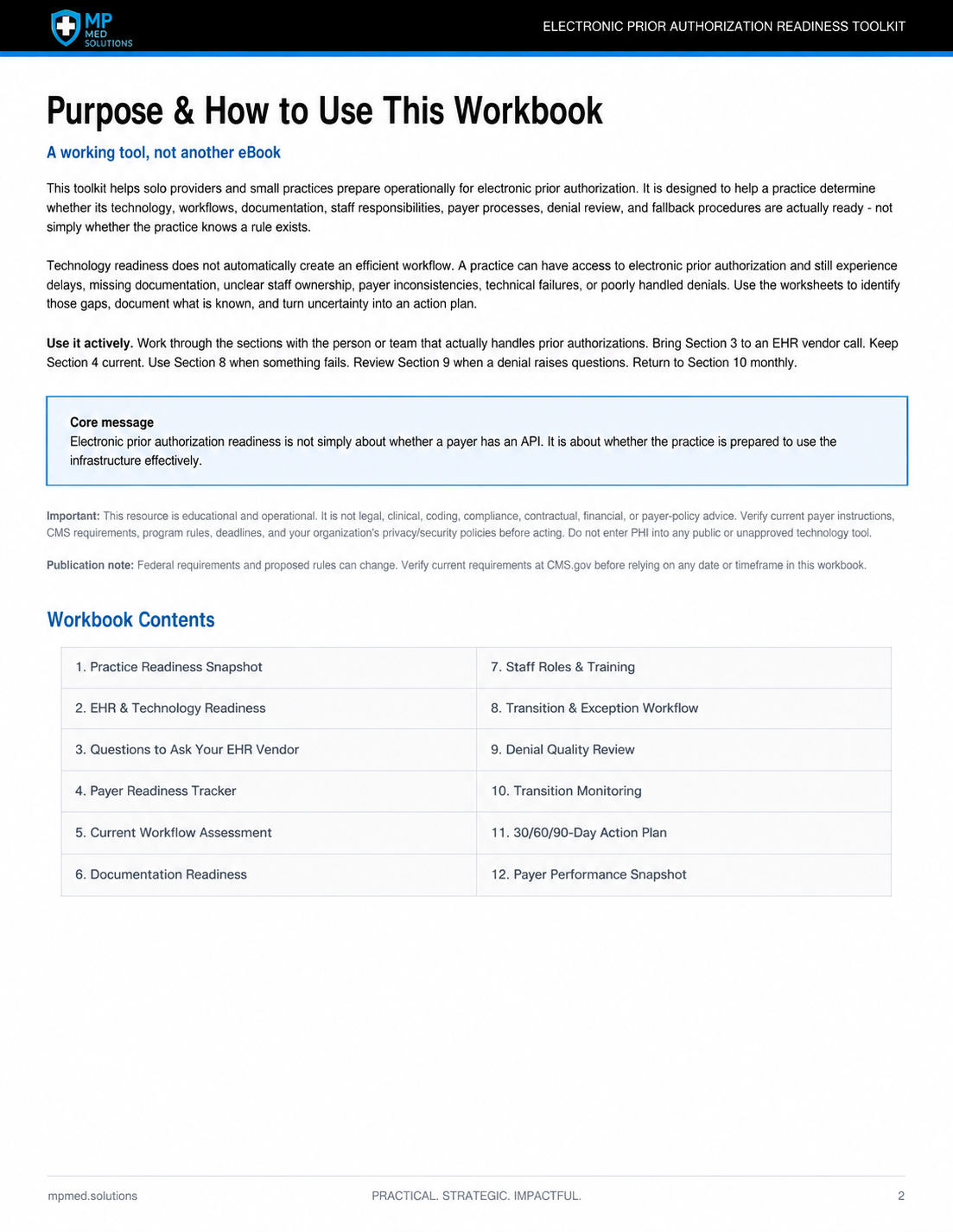 Image 2 of 4
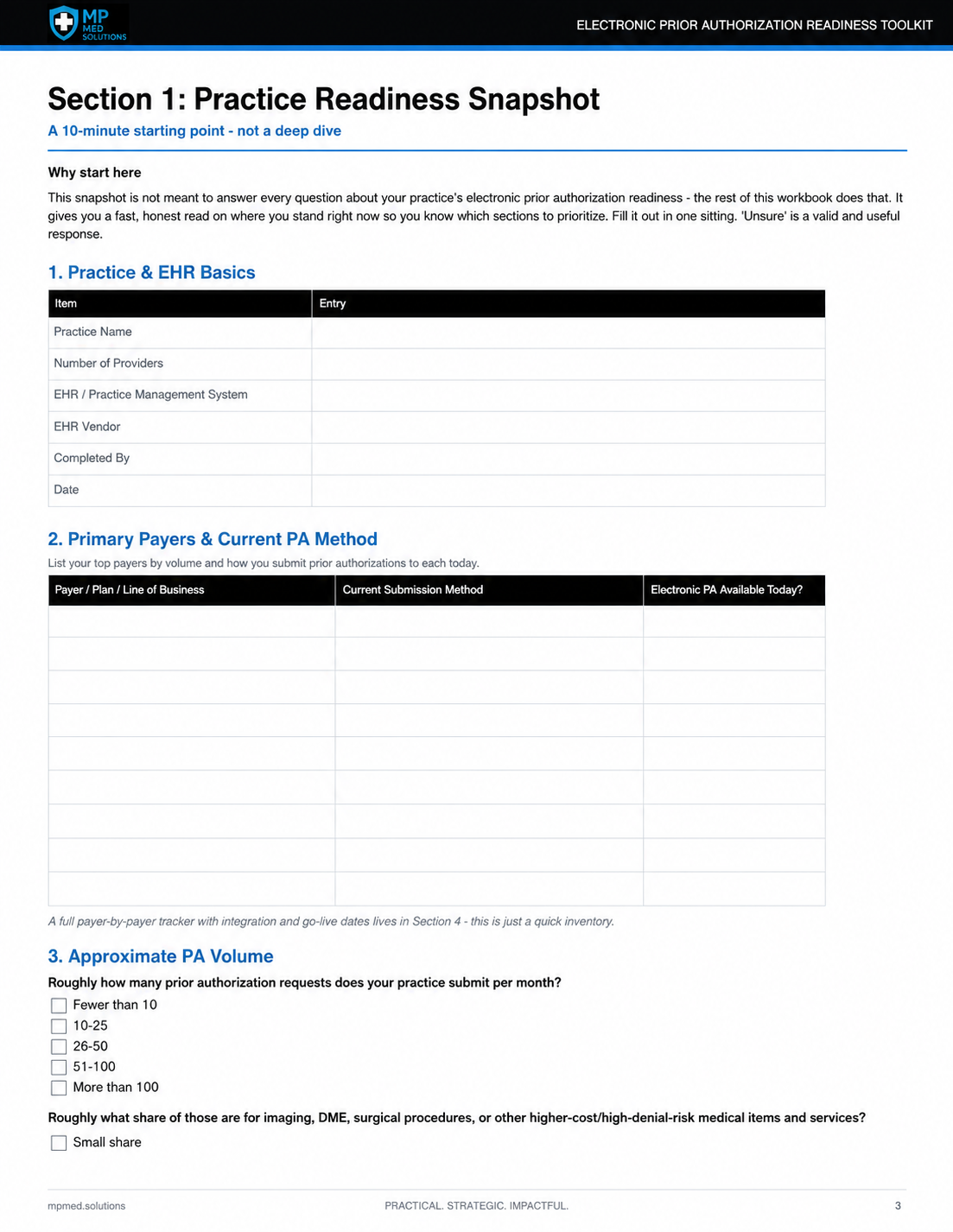 Image 3 of 4
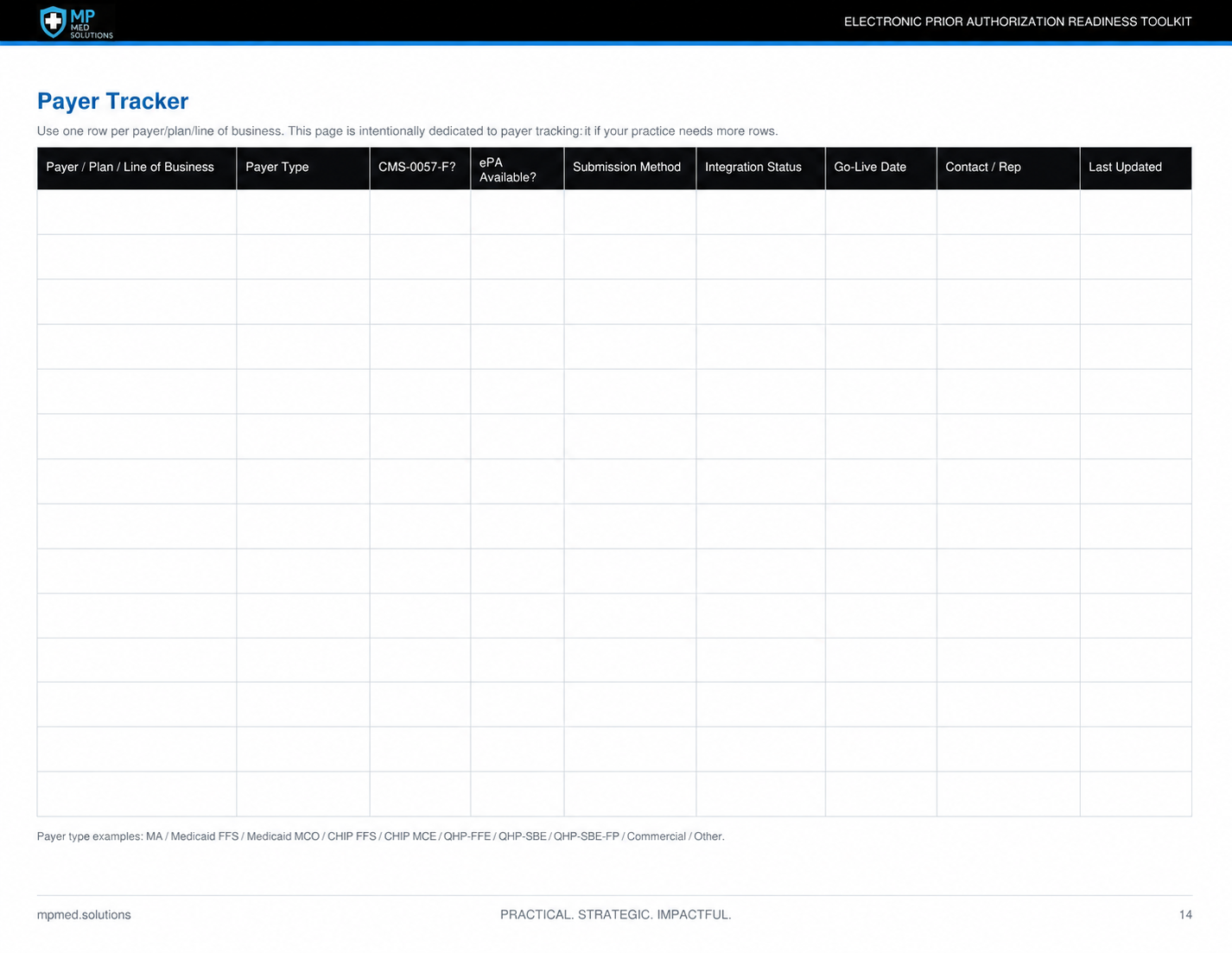 Image 4 of 4
A Practical Readiness & Workflow Assessment for Solo Providers and Small Practices
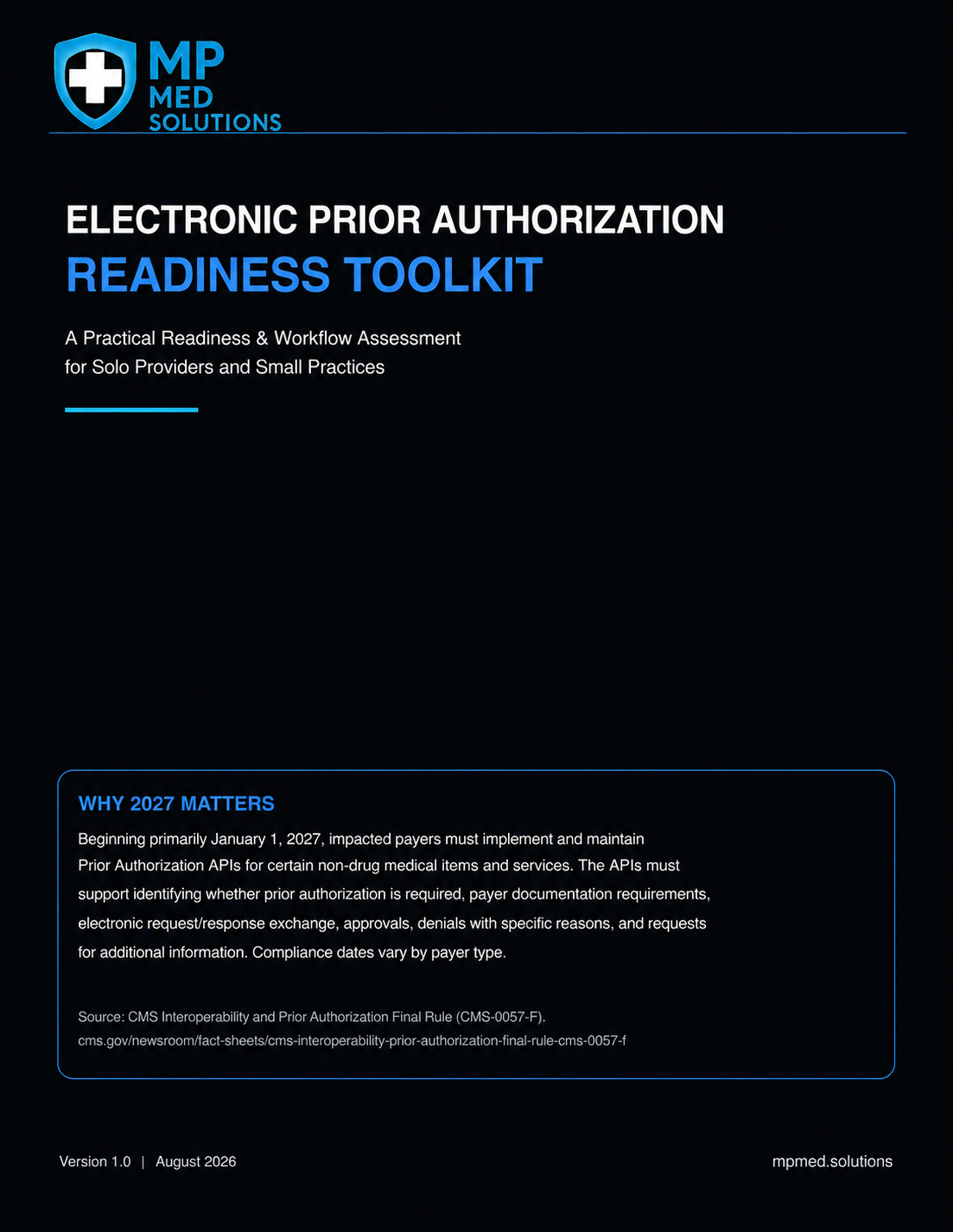
Beginning primarily January 1, 2027, impacted payers must implement and maintain electronic Prior Authorization APIs under CMS-0057-F. That's a requirement on payers — not on you. Whether your practice can actually take advantage of it depends on decisions inside your walls: is your EHR vendor ready? Do you know where each payer actually stands? Does your team have a real plan for the day something fails?
This isn't another explainer telling you a rule exists. It's a 42-page, fillable operational workbook built to help you answer those questions honestly — and turn the answers into an action plan, not just an awareness of a deadline.
Technology readiness doesn't automatically create an efficient workflow. A practice can have full access to electronic prior authorization and still lose time to missing documentation, unclear staff ownership, payer inconsistencies, and poorly handled denials. This toolkit is built around that reality.
Eleven working sections, each designed to be filled out — not just read:
Practice Readiness Snapshot — a 10-minute starting point that tells you where to focus
EHR & Technology Readiness — a practice-side audit of what your system actually does today
Questions to Ask Your EHR Vendor — a worksheet built to take directly into a vendor call
Payer Readiness Tracker — a living, payer-by-payer record of electronic PA status and go-live dates
Current Workflow Assessment — map what actually happens today, handoffs and all
Documentation Readiness — a quick check on where required documentation actually lives
Staff Roles & Training — turn "who handles this" into a documented plan with real backup coverage
Transition & Exception Workflow — your playbook for when the electronic process doesn't work
Denial Quality Review — a worksheet for reviewing not just why a request was denied, but how the denial was issued
Transition Monitoring — a monthly check on whether the transition is actually reducing work
30/60/90-Day Action Plan — turns everything above into a sequenced plan with a start date
Payer Performance Snapshot - compare payer-published prior authorization metrics with your practice’s own denial and turnaround experience
Sections 3 and 9 are the standouts — built to be strong enough to bring directly into a vendor call or a real denial dispute, not just fill a page.
Solo providers, practice managers, and billing staff at independent and small practices who need to move past "we know the rule exists" and into an actual operational plan — before the deadline, not after.
This is an educational and operational resource. It is not legal, clinical, coding, compliance, contractual, financial, or payer-policy advice. Regulatory requirements and timelines can and have shifted — always verify current requirements at CMS.gov before relying on any date in this toolkit.
Downloadable, fillable PDF. Type directly into it or print and complete by hand. Use it once as an assessment, or keep it as a living document — several sections (the payer tracker, the exception log, the monthly monitoring worksheet) are built to be revisited, not filled out once and filed away.
$39 | Instant Download
Electronic prior authorization readiness was never really about whether a payer has an API. It's about whether your practice is prepared to use the infrastructure once it exists
A Practical Readiness & Workflow Assessment for Solo Providers and Small Practices
Beginning primarily January 1, 2027, impacted payers must implement and maintain electronic Prior Authorization APIs under CMS-0057-F. That's a requirement on payers — not on you. Whether your practice can actually take advantage of it depends on decisions inside your walls: is your EHR vendor ready? Do you know where each payer actually stands? Does your team have a real plan for the day something fails?
This isn't another explainer telling you a rule exists. It's a 42-page, fillable operational workbook built to help you answer those questions honestly — and turn the answers into an action plan, not just an awareness of a deadline.
Technology readiness doesn't automatically create an efficient workflow. A practice can have full access to electronic prior authorization and still lose time to missing documentation, unclear staff ownership, payer inconsistencies, and poorly handled denials. This toolkit is built around that reality.
Eleven working sections, each designed to be filled out — not just read:
Practice Readiness Snapshot — a 10-minute starting point that tells you where to focus
EHR & Technology Readiness — a practice-side audit of what your system actually does today
Questions to Ask Your EHR Vendor — a worksheet built to take directly into a vendor call
Payer Readiness Tracker — a living, payer-by-payer record of electronic PA status and go-live dates
Current Workflow Assessment — map what actually happens today, handoffs and all
Documentation Readiness — a quick check on where required documentation actually lives
Staff Roles & Training — turn "who handles this" into a documented plan with real backup coverage
Transition & Exception Workflow — your playbook for when the electronic process doesn't work
Denial Quality Review — a worksheet for reviewing not just why a request was denied, but how the denial was issued
Transition Monitoring — a monthly check on whether the transition is actually reducing work
30/60/90-Day Action Plan — turns everything above into a sequenced plan with a start date
Payer Performance Snapshot - compare payer-published prior authorization metrics with your practice’s own denial and turnaround experience
Sections 3 and 9 are the standouts — built to be strong enough to bring directly into a vendor call or a real denial dispute, not just fill a page.
Solo providers, practice managers, and billing staff at independent and small practices who need to move past "we know the rule exists" and into an actual operational plan — before the deadline, not after.
This is an educational and operational resource. It is not legal, clinical, coding, compliance, contractual, financial, or payer-policy advice. Regulatory requirements and timelines can and have shifted — always verify current requirements at CMS.gov before relying on any date in this toolkit.
Downloadable, fillable PDF. Type directly into it or print and complete by hand. Use it once as an assessment, or keep it as a living document — several sections (the payer tracker, the exception log, the monthly monitoring worksheet) are built to be revisited, not filled out once and filed away.
$39 | Instant Download
Electronic prior authorization readiness was never really about whether a payer has an API. It's about whether your practice is prepared to use the infrastructure once it exists